

How Large Should a Photo Print Be? A Photographer’s Guide to Print Size
Why Print Size Matters in Photography
It is already March, and one quarter of the year has nearly passed. As I prepare for the upcoming season of street fairs and art markets, a basic philosophy of mine has resurfaced: a photograph is best appreciated when it is printed—and ideally printed large.
Of course, “large” is a relative term. The final size of a photographic print depends on several factors: the resolution of the image file, the subject matter, the printing medium, and the space where the photograph will be displayed. Still, I maintain that a print should be large enough for the viewer to step back and take in the image comfortably.
The Comfortable Viewing Distance
What does it mean to “take in” a photograph?
A good way to think about it is the comfortable viewing distance—the distance where a viewer naturally stands to appreciate an artwork. As photographers, this can be surprisingly difficult for us to judge. We often do the opposite of what most viewers do: we move closer and closer to a print until we are practically touching it with our noses, examining every detail and pixel to judge sharpness.
Most people do not view art that way.
If you visit a museum and watch how people interact with artwork, you will notice a pattern. Viewers often step forward and back until the piece fills a comfortable portion of their field of vision. Larger artworks invite viewers to stand farther away, while smaller pieces encourage a closer look. In other words, people instinctively adjust their viewing distance based on the size of the artwork.
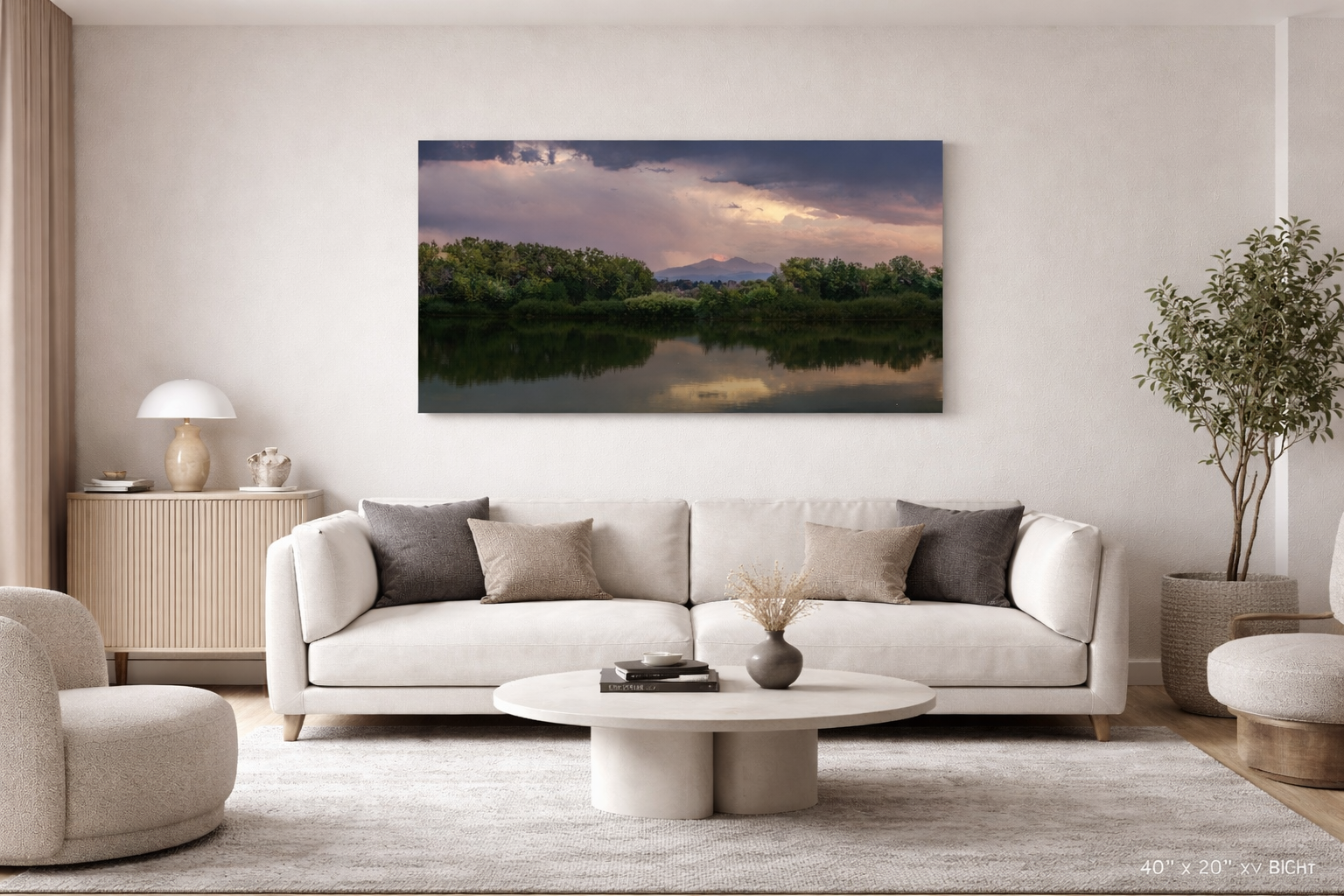
This relationship between viewing distance and print size is one of the key factors that determines how a photograph should be displayed. Many collectors of large landscape photography prints are looking for artwork that can anchor a room. A well-chosen large print allows viewers to experience the scene almost as if they were standing there. Mountain landscapes, sweeping horizons, and dramatic skies often benefit from a larger format because they allow the viewer to step back and take in the full composition.
How Room Size Influences Print Size
The space where a photograph is displayed plays an important role in determining its ideal size.
If a print is too large for a room, its scale can become distracting and overwhelm the space. On the other hand, if the print is too small, it may go unnoticed in the areas where people naturally spend their time.
A good example of this can be found in our own living room. On one wall hangs an 11×17 print of a milkweed plant in early fall, and on the opposite side is an 18×20 print of a tree and dam shrouded in fog. These sizes work well in that space. The prints are large enough to be easily appreciated from across the room while still fitting comfortably within the overall environment.
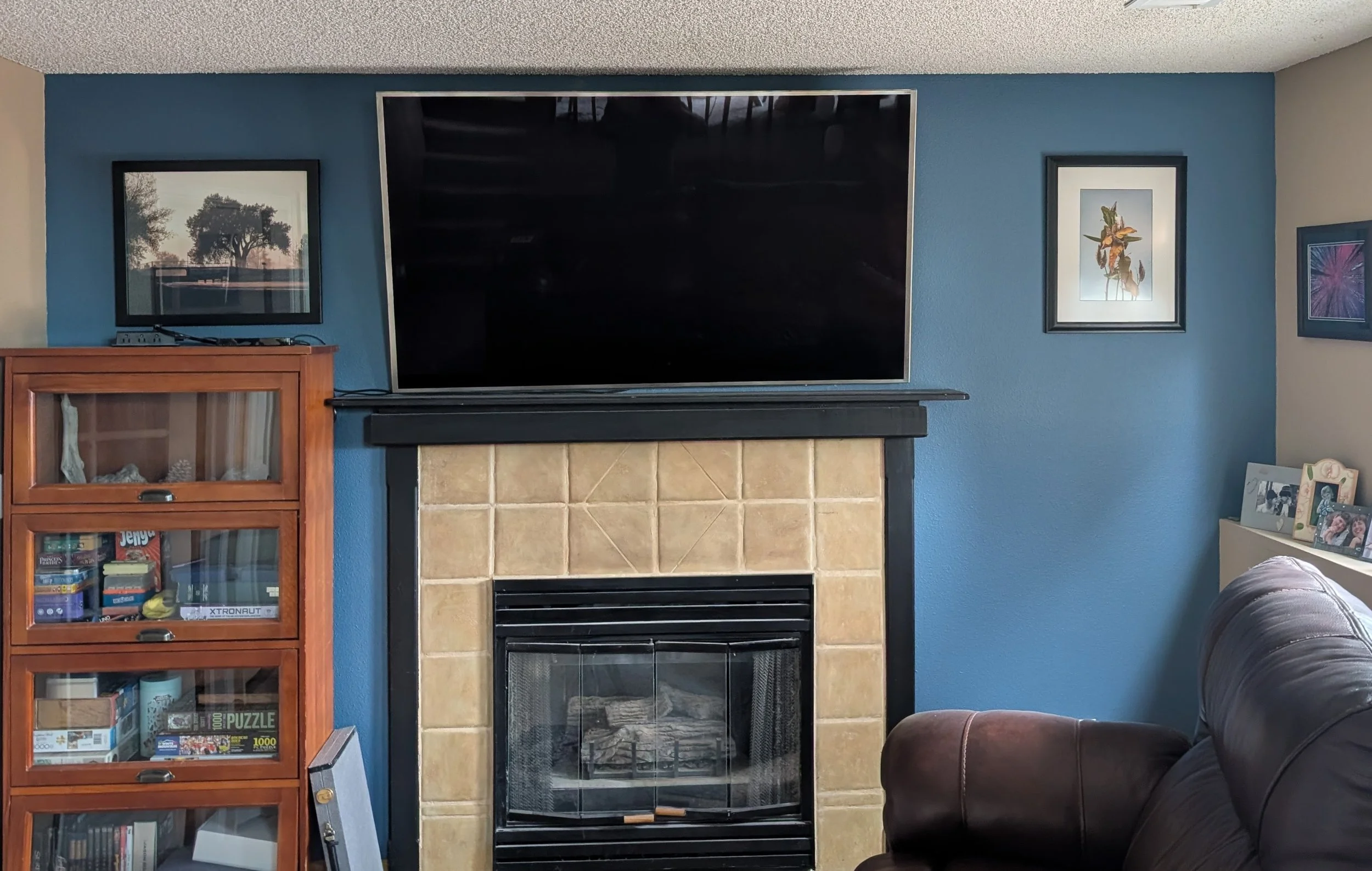
They attract attention without dominating the room.
Image Resolution and Maximum Print Size
Another practical limitation on print size is image resolution—specifically, the number of pixels contained in the photograph.
When preparing an image for printing, photographers often consider the relationship between total pixels and pixels per inch (PPI) in the final print. As a rough rule of thumb, producing a sharp 16×20 photographic print typically requires an image captured with a camera in the neighborhood of 30 megapixels.
As with most things in photography, the exact requirements depend on the subject matter, the viewing distance, and the printing medium. A highly detailed landscape may require more resolution than a minimalist image with large areas of color or tone.
Today, however, advances in AI-assisted image enlargement have made it possible to produce larger prints from smaller files than was previously practical. While these tools are impressive, they still work best when starting with a high-quality image.
The Photographer’s Intention
Another factor that influences print size is the intent of the photographer.
Consider a billboard beside a highway. Viewers will see that image from hundreds of feet away, often while moving quickly. In that situation, absolute sharpness is less critical, and the file does not need the same level of resolution as a print designed to be viewed up close.
At the other end of the spectrum are photographs intended to be intimate pieces—small prints meant to sit on a desk, shelf, or side table. I have several images that work beautifully in this format. These photographs add a quiet splash of color to a space or serve as a small reminder of a favorite landscape or moment in time.
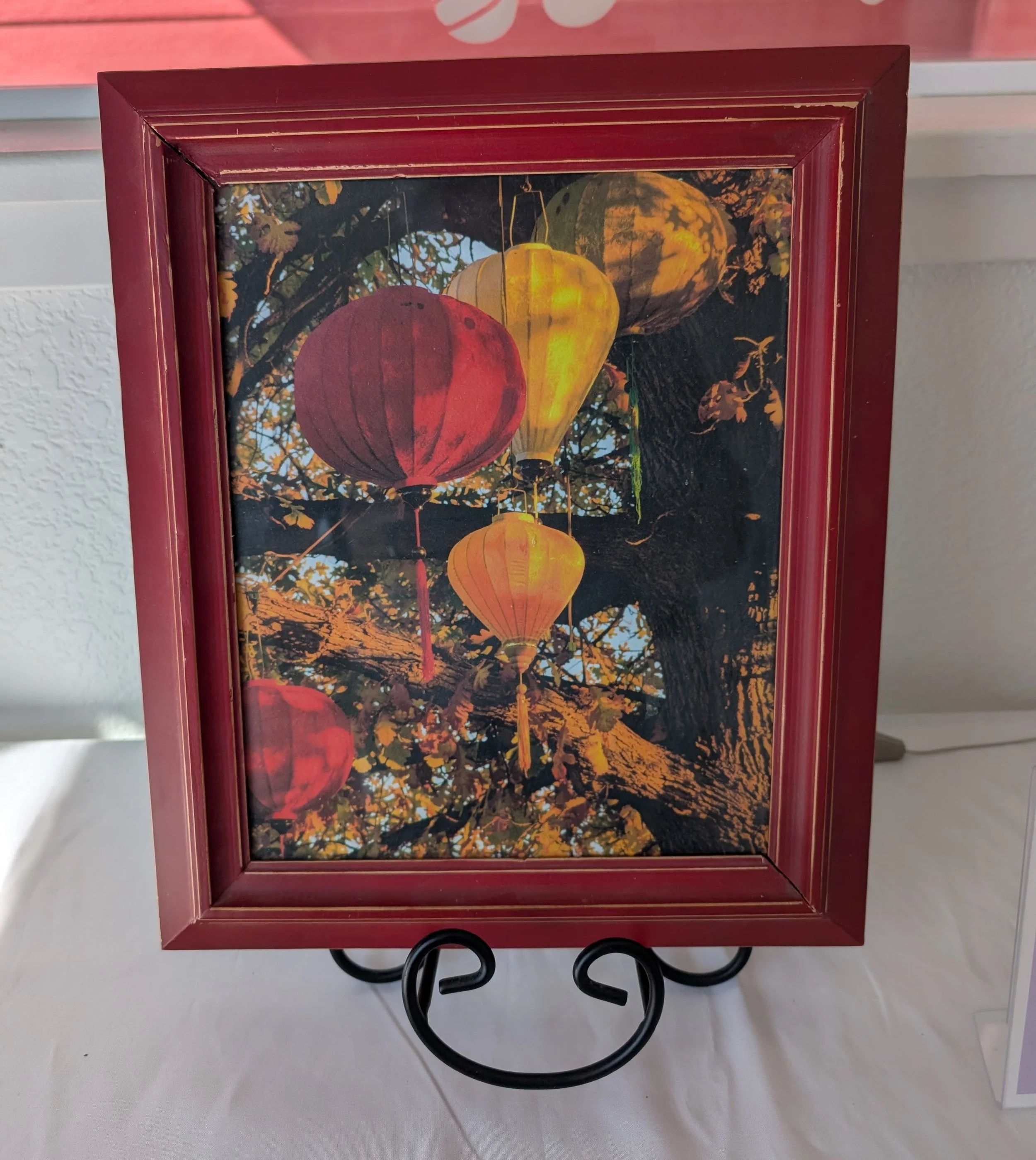
Japanese Lanterns in the Sunset
Rethinking “Print It Large”
After writing all of this, I realize I may need to modify my long-standing philosophy of “seeing it printed large.”
Perhaps a better way to say it is this:
A photograph should be printed at the size the photographer intended.
An image created specifically for Instagram or Facebook might also fit within this philosophy. Even so, I still believe that photographs reach their fullest expression when they exist as physical prints rather than images on a screen.
Maybe this entire blog post is just an old photographer reflecting on how the world has changed.
What do you think? (I finally figured out how to enable comments!)
Our Largest Print Yet
In keeping with this discussion of print size, Cattail Chronicles is currently offering the largest photographic print we have ever released on sale.
The piece is a 20×40-inch metal print of Longs Peak and Mount Meeker, produced on aluminum for exceptional detail and color depth.
The photograph captures Longs Peak and Mount Meeker in the distance as storm clouds gather overhead—a dramatic Rocky Mountain landscape that benefits from a larger presentation.
Take a look and imagine it on your wall.
Do you have a space that could accommodate a print of this size?
I would like to close by thanking you all for taking the time to visit our website and read this blog. Thank you.
Steve and Monique